
Honest Fixes That Last
Family-owned siding and exterior experts serving Southwest Virginia
Get a Free Estimate
What’s covered on this page
Most siding damage falls into three groups: cracks, buckling, and storm damage like loose or missing pieces. A single cracked or blown-off panel is often a small fix. The bigger question is whether water got behind it, because that decides how much work your wall really needs. Repairs are part of the everyday work we do as a siding contractor in Thaxton.
When you spot a problem on your siding, the way it looks tells you a lot. Here’s what each kind of damage usually points to, so you know what you’re dealing with before anyone climbs a ladder.
Cracks. Vinyl gets stiff when it’s cold. On a January morning, a hailstone, a thrown rock, or a string trimmer can crack it. The same hit in July might only leave a dent. Fiber cement, a siding made from cement, sand, and wood fibers, is harder, but a sharp hit can still crack it. It can also crack where a nail was driven too close to the edge. One cracked board is usually a small repair. We take out the damaged piece and put in a new one.
Buckling. This means panels bulge, wave, or pull away from the wall. Vinyl grows and shrinks as the temperature changes, so it needs room to slide on its nails. If it was nailed down too tight, it has nowhere to go in summer heat, and it bows out. A grill parked too close or strong sunlight bouncing off a nearby window can also warp vinyl. If only a few panels are buckled, they can often be refastened or swapped out. If a whole wall is waving, the way it was installed may be the real issue.
Storm damage. Around Thaxton, strong summer thunderstorms bring high wind and sometimes hail. Wind gets under the bottom edge of a panel and can lift it or tear it loose. Hail leaves dents, chips, or cracks, usually on the side of the house that faced the storm. After a big storm, walk around your house and look for:

The damage you can see isn’t always the whole story. A crack or gap lets rain get behind the siding. Freeze and thaw cycles in Bedford County winters can make small openings bigger over time. Watch for soft or spongy spots when you press on the wall. Also look for swelling or rot on wood or engineered wood siding, stains or peeling paint on inside walls, or a musty smell. Any of those means we need to check the sheathing, the wood layer behind your siding, before patching the outside.
If a storm caused the damage, take photos before anything gets moved or fixed. We can inspect and document the damage, write an estimate and scope of work, and meet your adjuster on-site to answer questions about our estimate. If the damage looks worth a claim, we’ll tell you, and whether to file is your decision.
Here’s the honest answer. A lot of the time, a repair is the right call. If a few panels cracked, blew loose, or buckled and the wall behind them is sound, there’s no reason to redo your whole house. We’ll tell you that plainly, even though a replacement would be the bigger job for us.
Replacement starts to make sense when the problem isn’t really a few bad pieces. It’s the siding as a whole. That’s the question we’re answering when we walk your house: is this damage in one spot, or is it a sign of something bigger?
A repair usually makes sense when:
Replacement is worth talking about when:
Color matching is the part that surprises people. Siding that has sat in the sun for years fades, especially on the south and west walls that take the afternoon heat. A brand-new panel of the same color can stand out next to it. Some colors and styles also get discontinued. One common fix is to take matching pieces from a spot you don’t see much, like behind a deck or on the back of the garage, and put the new pieces there instead. When there’s no good match at all, you’ll have to decide if a patch you can see bothers you enough to redo that wall.
Here’s the tradeoff in plain terms. A repair costs less now and fixes the problem in front of you. But if the rest of your siding is near the end of its useful life, you may be paying for another repair next season, and then another. A replacement costs more up front. It also gives you a clean start, a chance to fix old install mistakes, and a chance to choose a different material if you want one. Insulated vinyl, fiber cement, and LP SmartSide engineered wood each have their own strengths and costs, and we’ll walk you through them if that’s where you land.
What drives the price of a repair? Mostly how many pieces need replacing, what kind of siding you have, how high up the damage is, and whether we find problems behind it. Matching can add to it too, if we need to hunt down the right profile or move pieces around. For a full replacement, the size of the house, the material you choose, and how much trim, soffit, and fascia need work all play a part.
If replacement does turn out to be the right move, we’ll lay out the options. But we’d much rather do the smaller job right than sell you a bigger one you don’t need.
Need help with Siding repair?
Get a Free Estimate. Premier Exterior Improvements LLC is ready to help.
Not everything that looks wrong with your siding needs a contractor. Some of it is dirt. Some of it is normal aging. And some of it isn’t a siding problem at all. Here’s what you can let go, handle yourself, or put off for now.
Green or black film, usually on the shady side. Thaxton summers are humid, and the north wall or any wall under big trees stays damp longer. Mildew and algae love that. It looks bad, but it’s sitting on the surface. A gentle wash usually takes care of it. Go easy with a pressure washer. Spraying hard or aiming up under the panel edges can push water behind the siding, and that’s how a cleaning job turns into a real problem.
A vinyl panel that popped loose at the bottom. Vinyl locks into the panel below it. A strong gust can unhook it without breaking anything. If it’s low enough to reach from the ground and it isn’t cracked, it can often be pressed back into place by hand. If it’s up high or keeps coming loose, that’s when it’s worth a call.
A small dent with no crack. A shallow dent in vinyl from a ball or a bump won’t let water in. It’s cosmetic. You can live with it, or fix it later when you’re doing other work on the house.
Even fading across the whole house. All siding fades in the sun over time. If it’s faded evenly and still feels solid and flexible, it’s doing its job. That’s a color question, not a repair.
Cracked caulk around windows and trim. Caulk dries out and pulls away after a few seasons of heat and cold. Re-caulking those joints is basic upkeep, and plenty of homeowners do it themselves on a dry weekend.
Sometimes the siding gets blamed for something else. Here are a few problems that show up on your walls but start somewhere different:
Can it wait? If the damage is cosmetic, the wall behind it feels firm, and none of the moisture signs we talked about earlier are showing up, yes, it usually can. A dent or a faded wall doesn’t get worse because you waited until spring. A crack or an open gap is different. Water and our freeze and thaw winters make those grow, so don’t sit on those for long.
The simple test is this. If water can’t get in and nothing is loose, you probably don’t need us yet. If water can get in, or you can’t tell, that’s when it’s worth having someone look.
Color gets most of the attention, but it’s only half of a good match. The other half is shape. Two boards can be the same color and still look wrong side by side if the width, texture, or edge doesn’t line up. Each type of siding has its own things to get right.
Vinyl comes in a lot of profiles. A profile is the shape of the board: how wide each row looks, whether it has a flat face or a curved Dutch lap edge, and how the top of one panel locks into the next. Thickness matters too. A thinner panel next to a thicker one can sag or sit at a slightly different angle. The locks also have to fit, or the new panel won’t hold tight against the old ones through a summer of heat and a winter of freezing and thawing.
That’s why we look closely at what’s on your wall before ordering anything. Even small differences, like the fake wood grain running a little deeper, can catch the light at certain times of day.
Fiber cement is a little easier on the color side, because most of it is painted. If a board is damaged, a new one can go in and be painted to match. Fresh paint on one board will look brighter than the faded paint around it, though. Sometimes the cleanest fix is to repaint the whole wall, corner to corner, so there’s no line where old meets new.
The shape still has to match. Fiber cement comes smooth or with a wood grain texture, and in different board widths and thicknesses. Cut ends need to be sealed and painted. In our humid summers, a raw edge left open can soak up water.
James Hardie is one of the most common fiber cement brands, and we install James Hardie products. Hardie siding often comes with a factory-applied color instead of paint added after install. A new factory-finished board can match well if the color is still made. It’ll still look fresher than boards that have had years of sun. If the color has been discontinued, painting that section or wall is usually the way to go.
Not sure what brand or style you have? That’s normal, and there are a few easy things you can check that help a lot.
If you have engineered wood like LP SmartSide, the same ideas apply. The width, texture, and edge style need to match, and the finish usually gets painted to blend in.
Every siding repair quote is built from the same few pieces: labor, materials, getting to the damage, and whatever turns up behind the wall. Once you know how those fit together, an estimate stops feeling like a mystery number.
On a small repair, labor is usually the biggest part. Siding locks together row by row, so fixing one panel in the middle of a wall means unhooking the pieces above it, pulling the nails, and working the new piece back in. Vinyl comes apart fairly quickly with the right tool. Fiber cement is heavier, it’s cut with special blades to keep the dust down, and it often needs primer and paint afterward. The same size repair can take noticeably longer on one material than the other.
A lot of contractors in this trade have a minimum charge for small jobs. Driving out, setting up ladders, and cleaning up take about the same time whether it’s one panel or six. If you’ve got a few small problems around the house, like a cracked piece by the back door and a loose corner post, it usually makes sense to have them fixed in one visit instead of three.
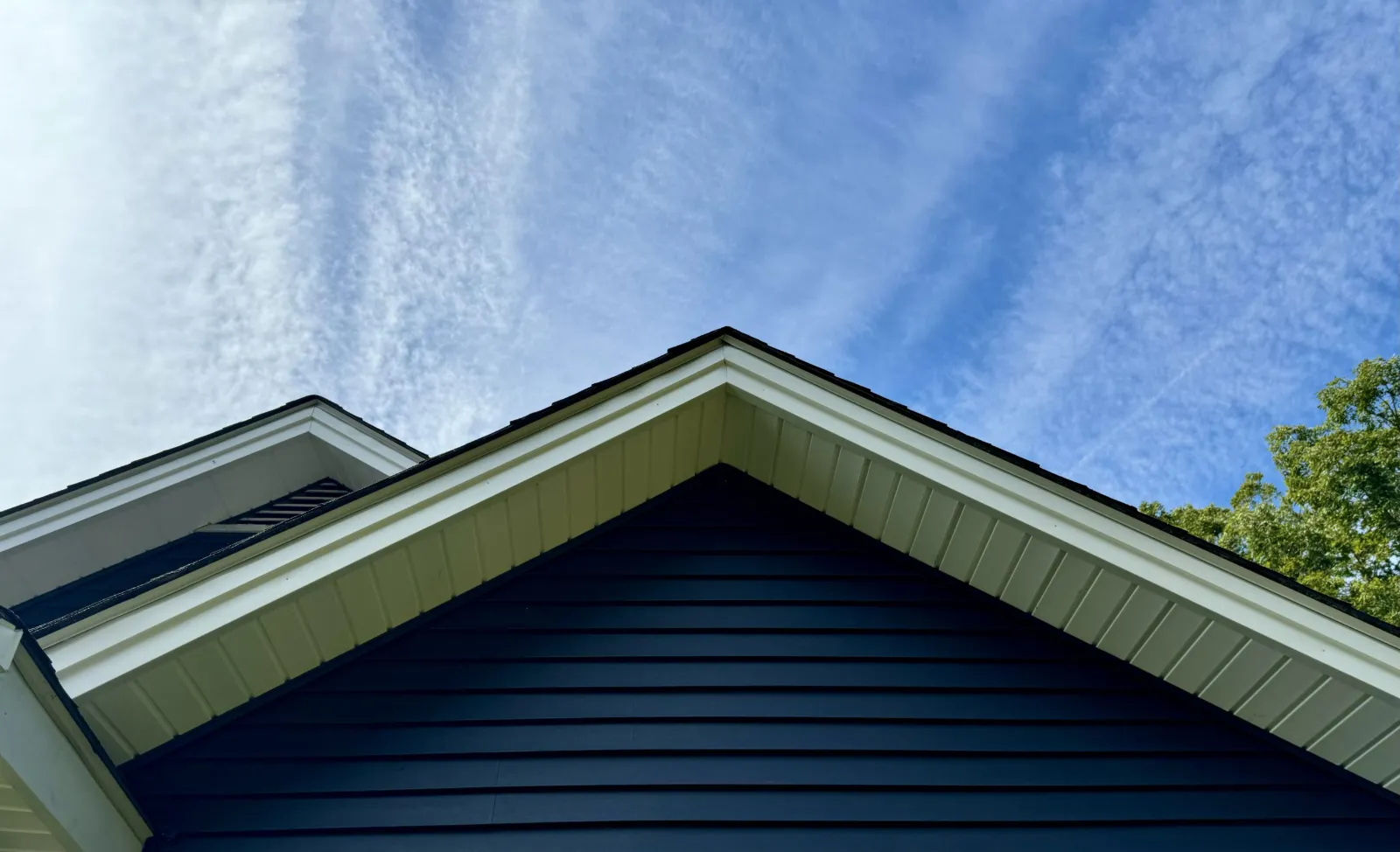
Where the damage sits matters too. A panel you can reach from the ground is simple. A spot high on a gable end, the triangle wall under the roof peak, may need tall ladders or staging. Here in Bedford County, plenty of homes sit on sloped lots, and the downhill wall can be a lot taller than it looks from the driveway. A deck, a big shrub, or an HVAC unit parked against the wall can also slow things down.
Materials can surprise people. Vinyl is usually sold by the box, so even a two-panel repair may mean buying a full carton. Ask to keep the extras. They’ll be the closest match you’ll ever find if something gets hit again. A repair can also call for trim, corner pieces, J-channel (the strip that frames windows and doors), house wrap, caulk, and paint.
The biggest wild card is what’s behind the siding. If the sheathing is wet or soft, it has to be fixed before new siding goes on. Nobody can see that for sure until the panels come off. A good estimate says plainly what’s included and explains how any damage found underneath will be priced and approved before extra work starts.
Timing plays a small part as well. After a big thunderstorm rolls through, lots of people need repairs at once. And paint and caulk need dry, mild days to cure properly, so fiber cement touch-ups can depend on the weather.
Before you hire anyone, these questions help you compare quotes fairly:
We’re happy to answer that last one up front. We’re a licensed Virginia Class B Contractor, License #2705199374.
Yes, in most cases a few damaged panels can be replaced without redoing the whole wall. We take out the cracked or loose piece and fit a matching new one, as long as the sheathing behind it is dry and solid. It only makes sense to talk about a bigger job if the damage shows up on several sides of the house or the rest of the siding has gone brittle.
Watch for soft spots, warped or bulging panels, peeling paint on inside walls, or water stains near windows. When we come out, we check what we can see and tell you if we think water has gotten behind the siding.
If a storm caused the damage, it may. We document the damage with photos and write a detailed estimate your adjuster can review. Your insurance company decides what your policy covers.
Get a free estimate. Call (540) 597-2328 today.
Get a Free Estimate