
Built to Handle Local Weather
Family-owned siding and exterior experts serving Southwest Virginia
Get a Free Estimate
What’s covered on this page
LP SmartSide is an engineered wood siding. It gives you the warm look of real wood with more strength and less weight than many other siding types. It holds up well in our humid summers and freeze-thaw winters, but only when it’s installed with the right gaps, sealed cuts, and a solid paint finish. It’s one of the materials we install as a Thaxton siding contractor.
If you’re thinking about LP SmartSide installation in Thaxton, here’s the short version. The board is only half the story. How it goes on your wall decides how well it holds up. A good product put up carelessly can swell and fail. The same product put up with care can look sharp for a long, long time.
So what is it? LP SmartSide is made from wood strands bonded with resins and wax, then pressed into boards and panels. The strands are treated to resist rot and termites, and the surface has a wood grain texture. It comes in lap siding, which is long horizontal boards, plus panels for board and batten looks, and matching trim.
Every material has a tradeoff, and we’d rather you hear it from us up front. Here’s how LP SmartSide stacks up for homes around Bedford County.
That last point is why the install matters so much here. Our summers are humid and our thunderstorms can be heavy. In winter, the water that soaks into a gap can freeze and thaw over and over. LP’s own installation instructions spell out clearances from the ground, roof lines, decks, and walkways. They also cover sealing cut ends, nailing so the boards can move a little, and leaving gaps where boards meet trim. Skip those steps and moisture finds its way in.
What’s under the siding counts too. A good install starts with a sound wall, a weather barrier, and flashing around windows and doors. Flashing is the thin metal or tape that steers water away from openings. If your sheathing is soft or stained, that needs fixing before any new siding goes up.
And sometimes you don’t need a full new wall at all. If a storm dinged a few boards on one side of the house, replacing those boards may be the right call. We install LP SmartSide products, and we’ll tell you whether you’re looking at a repair or a full replacement.
Most siding problems start small. A cracked board, a patch of peeling paint, a gap by a window. Those can often be fixed. It’s time to think about full replacement when the trouble shows up on more than one wall, or when it’s getting into the house itself.
Here’s what we look for when we walk a house in Bedford County:
Any one of these on a single wall might be a repair. Several of them spread around the house usually means the siding as a whole has stopped protecting your walls.
Where the damage shows up tells you a lot. North-facing walls here stay damp longer through our humid summers. The west side takes the hard afternoon sun, which bakes paint and fades color fast. Then winter comes and water that got into a crack freezes and thaws again and again. A house can look fine from the road while one side is quietly breaking down.
Older pressed-board siding deserves a closer look. Some of it was made before today’s engineered wood products, and once it starts swelling at the edges, patching it rarely holds. Matching can be a problem too. If your profile or color isn’t made anymore, new boards may stick out on the wall.
Pay attention to why the old siding failed, not just that it failed. Boards that sit right on the ground or butt tight against a roof line, a deck, or trim will pull in water no matter what they’re made of. Missing flashing over a window lets water run behind the wall. If that’s the cause, a straight swap won’t fix it. The new siding needs to go on with the right clearances and sealed edges, or you’ll be looking at the same damage again down the road.
Repeated repairs are another sign. If you’re fixing a different wall every year, the money might go further on one complete job done right. And if we pull a board and the sheathing behind it is soft, that’s part of the job too. It’s better to find it now than to cover it up.
We’ll be honest with you either way. If what you’ve got is a few bad boards, we’ll say so and quote the repair. If it’s more than that, we’ll show you what we found and why.
Have questions? We’re happy to help.
Get a Free Estimate. Premier Exterior Improvements LLC is ready to help.
Not every siding problem calls for new siding. A lot of what homeowners find after a storm or a long winter is smaller than it looks. Here are the cases where we’d tell you to hold off on a full install.
The damage is in one spot. Say a limb came down in a thunderstorm and punched two boards on the side porch wall. The rest of the house is solid. That’s a repair. If your house already has LP SmartSide, new boards can be cut in and painted to match. If it’s an older siding that’s hard to match, we’ll talk through whether one wall can be redone without the rest of the house looking off.
The paint is tired, but the boards are fine. Faded color on the wall that takes the afternoon sun doesn’t mean the siding failed. If you press on the boards and they’re firm, with no swelling at the edges, a good repaint may be all it needs. Engineered wood depends on its finish, so keeping up the paint is normal care, not a sign of trouble.
The siding isn’t the real problem. Sometimes the boards get blamed for something else. Here are a few we’d check first:
Fix the cause, and the siding may be just fine. Put new boards up without fixing it, and you’ll get the same damage again.
Some of this you can handle yourself. Washing mildew off a shady north wall, pulling mulch back from the bottom edge, and cleaning out clogged gutters don’t need a contractor. Those small habits go a long way in our humid summers.
An inspection makes sense when you can’t tell what you’re looking at. That might be a stain on an inside wall with no clear source, or a soft feel near a window. After a hailstorm or a strong wind, it helps to have someone look before you decide anything. If there’s real storm damage, we can inspect and document it, write up an estimate and scope of work, and let you know if filing a claim makes sense. If you file, we can meet your adjuster on-site and answer their questions about our estimate.
It’s also worth a look if you’re buying an older home around Bedford County and the siding is original. Knowing what’s behind the boards before you close is better than finding out the first winter.
Finally, if your siding is sound and you just want a new look, there’s no rush. That’s a choice, not a repair. Take your time with colors and styles, and do it when it fits your plans.
Two houses can get the same LP SmartSide boards and end up in very different shape a few winters later. The difference usually isn’t the product. It’s a handful of small steps that are easy to skip and hard to see once the wall is finished.
Around Thaxton and the rest of Bedford County, those small steps get tested hard. Humid summers keep walls damp. Strong thunderstorms drive rain sideways. Then winter water freezes in any gap it found, swells, thaws, and does it again. A mistake that might sit quietly in a dry climate shows up here.
Beyond the clearances and sealed cut ends we covered earlier, here’s what a careful install gets right:
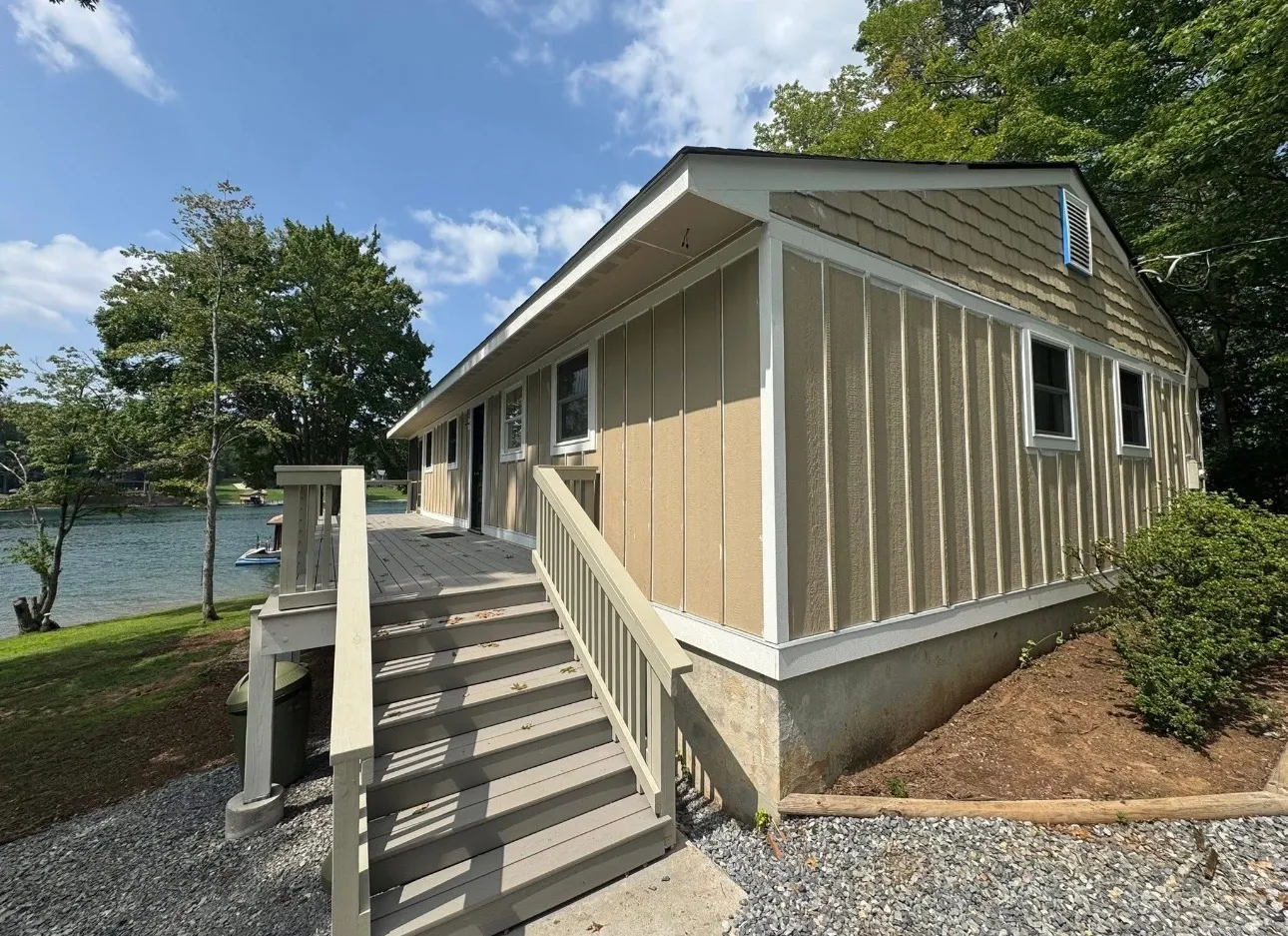
None of these steps are fancy. They just take time, and they’re the first things to go when a crew is rushing to finish. The trouble is you won’t see the results for a while. The wall looks great on day one. The swelling at a joint or the stain under a roof line shows up a couple of seasons later, after the crew is long gone.
That’s the real reason to care who puts your siding up. You’re not just paying for boards on a wall. You’re paying for the parts nobody looks at once the job’s done.
Whoever you talk to, here are fair questions to ask before you sign:
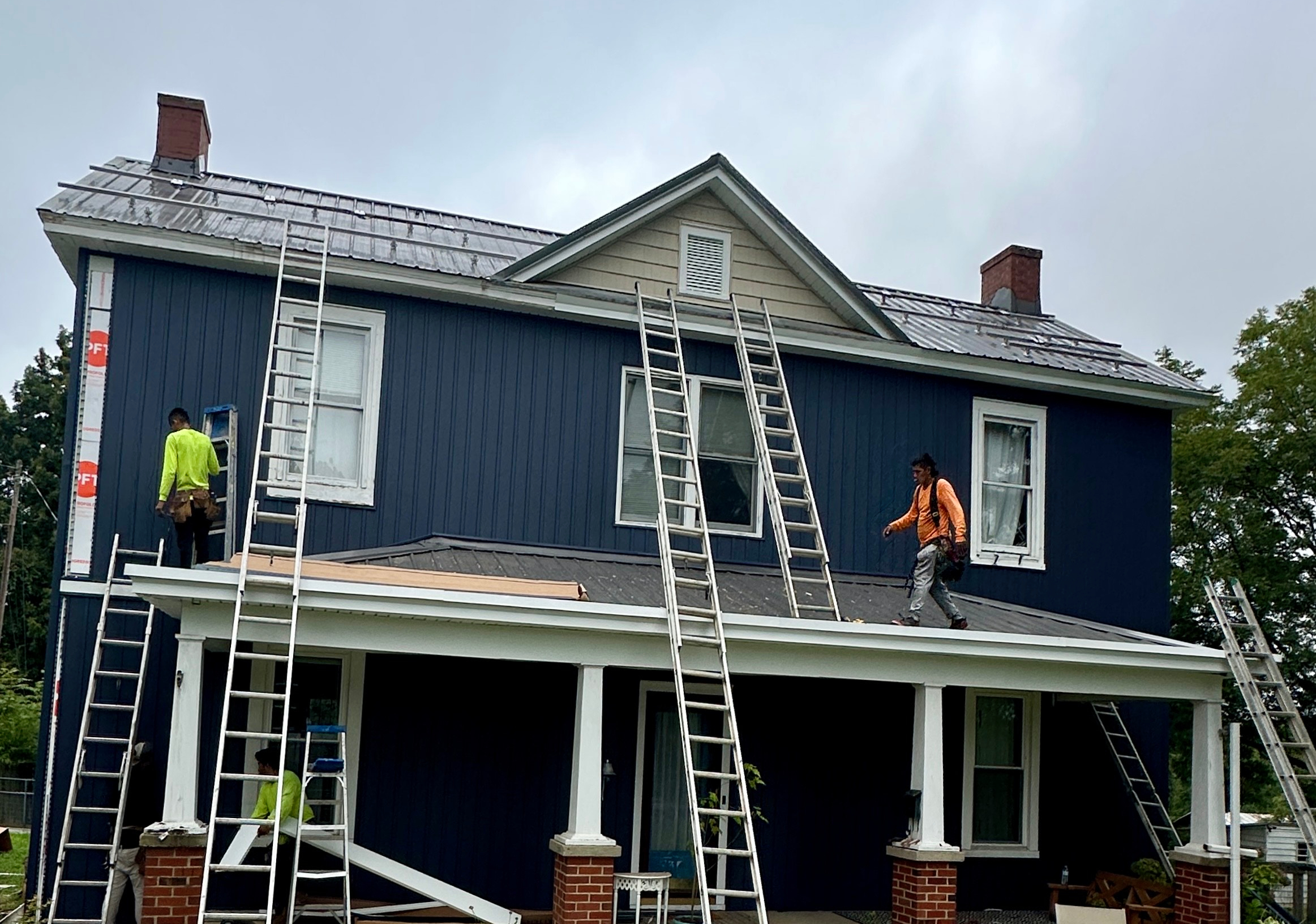
A contractor who does careful work won’t mind any of these. They’ll answer plainly and show you where each piece goes on your house.
Knowing what’s coming makes a siding project a lot less stressful. Every house is different, but most LP SmartSide installations follow the same basic path from the first visit to the final walk-around.
It starts before anyone picks up a hammer. Your walls get measured, the windows, doors, and roof lines get noted, and you choose your style and color. This is also when you decide between factory-finished boards and primed boards that get painted after they’re up. Factory-finished boards cost more up front but skip a painting step. Primed boards give you any color you want, but the paint has to be scheduled on time.
Once the material arrives and work begins, the job usually moves in this order:

Weather plays a part here. A summer thunderstorm rolling in over Bedford County can stop work for an afternoon. A careful crew covers any open wall and waits it out rather than rushing boards onto a wet surface. A delay like that is a good sign, not a bad one.
There are a few things you can do to get your home ready:
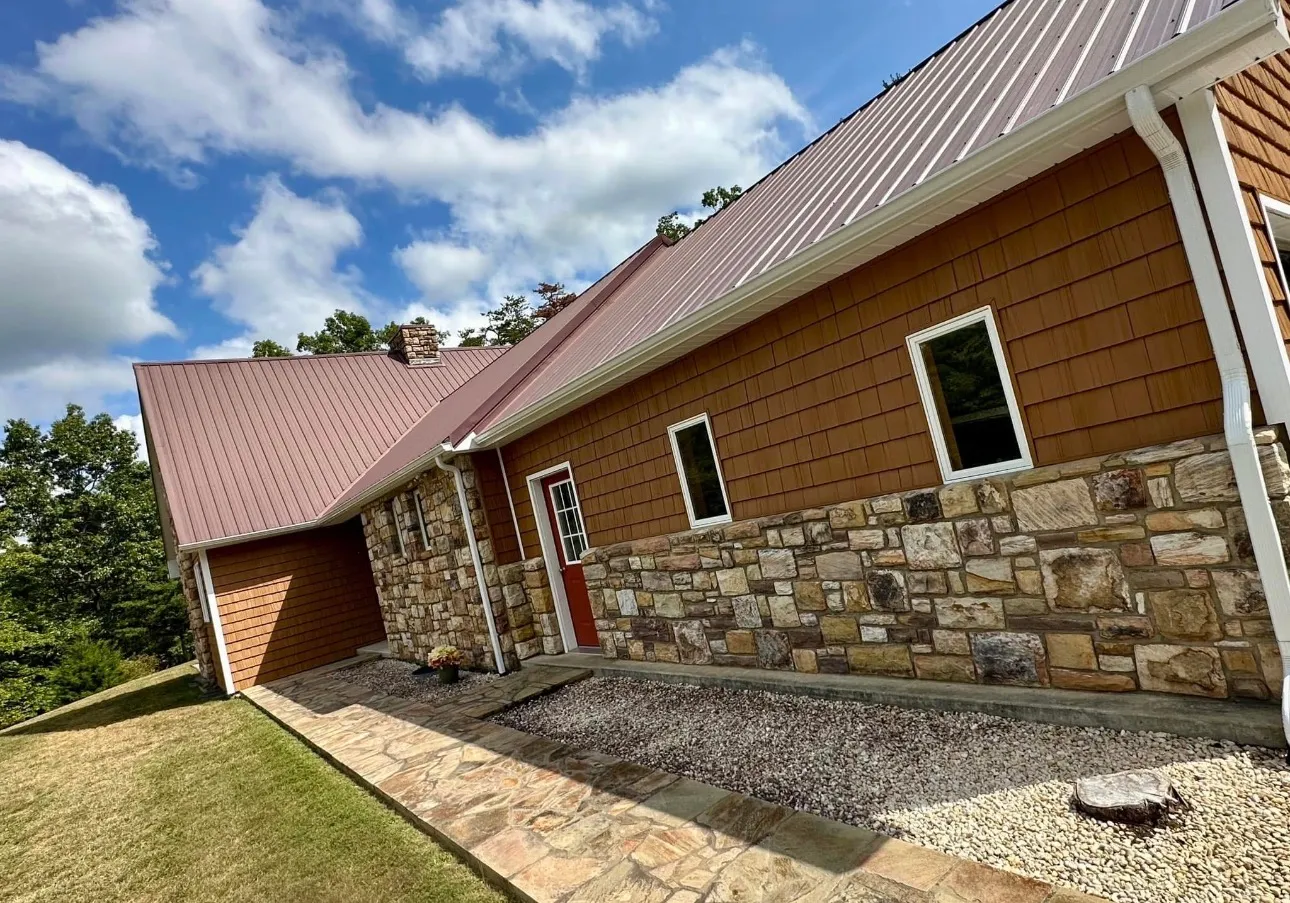
Expect some noise and dust while the old siding comes off. That’s the messiest part, and it’s short. After that, things get quieter and you’ll see real progress each day.
At the end, the yard should be cleaned up, including a sweep for stray nails in the grass and driveway. Then walk the house with your contractor. Look at the corners, the trim around windows, and the bottom row near the ground. Ask about anything that looks off. This is the time to point it out, not months later.
If you’ve got questions about how this would go on your house, like a tricky roof line or an older wall that might hide damage, we’re glad to walk through it with you. We offer free estimates and no-pressure inspections.
It’s engineered wood. The boards are made from wood strands bonded with resins and waxes, then treated to help them resist rot, fungal decay and termites. You get the look of wood with a lot less of the upkeep.
It’s often priced between the other two. It’s lighter than fiber cement, so it goes up faster, and it has a deeper wood grain than most vinyl. James Hardie holds up better to fire, and vinyl siding costs less up front. We install all three, so we’ll tell you which fits your house and budget.
It comes either primed for paint or with a factory-applied color. Primed boards get painted soon after they go up. A factory finish holds up for years, but like any painted siding, it will need a fresh coat someday.
Get a free estimate. Call (540) 597-2328 today.
Get a Free Estimate