
Know When to Fix, Not Replace
Family-owned siding and exterior experts serving Southwest Virginia
Get a Free Estimate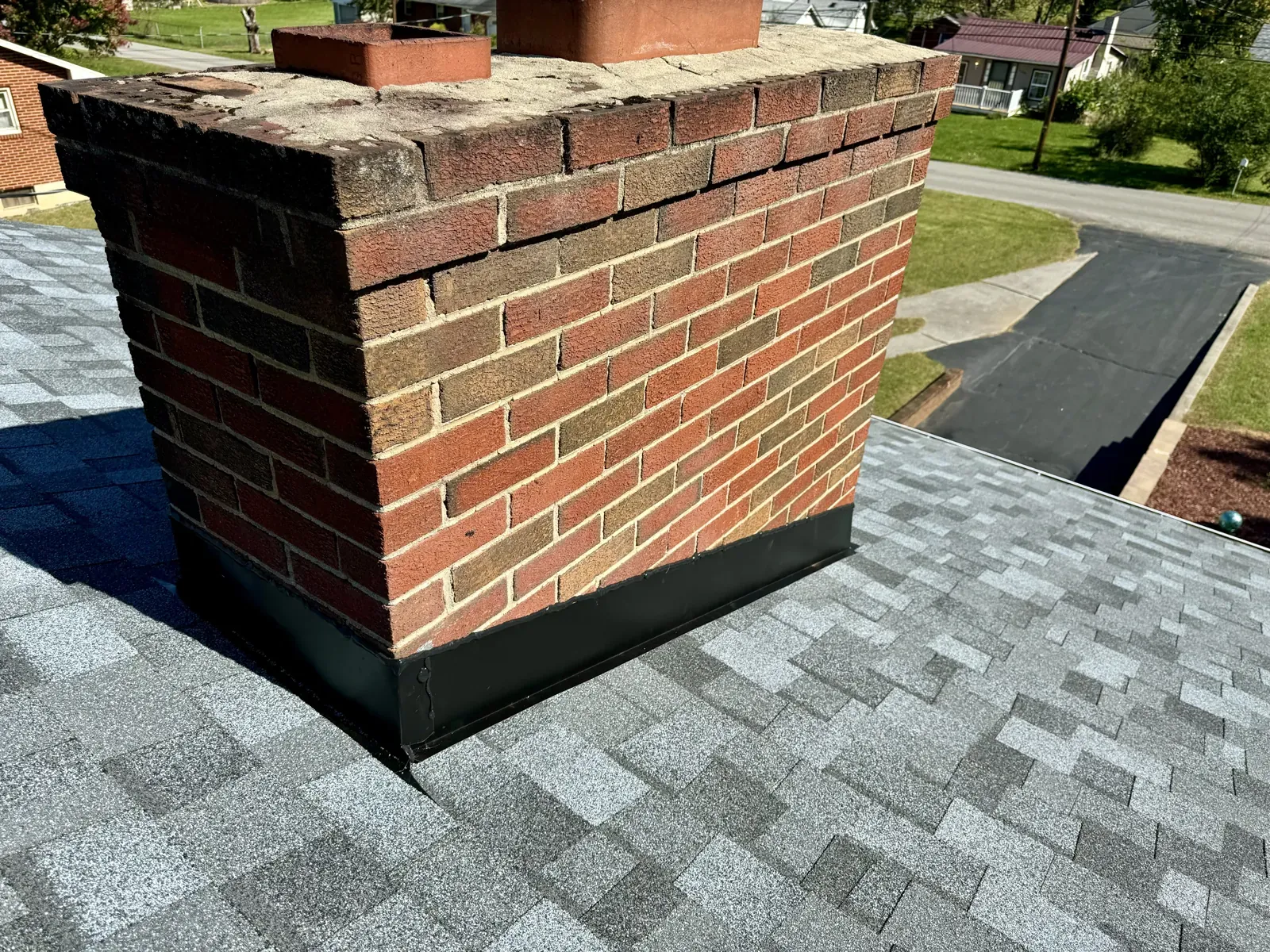
What’s covered on this page
If the problem is in one spot, like a few blown-off shingles, a leak at a pipe or chimney, or loose flashing, a repair is usually the right call. A full replacement starts to make sense when the wear is spread across the whole roof or the wood underneath is giving way. A careful look at the roof and the attic tells you which one you’re dealing with. It’s part of the work we do as a roofing contractor in Thaxton.
A lot of homeowners hear “roof problem” and picture a whole new roof. Most of the time, that’s not where it starts. Roofs usually fail at a few weak points, and those points can be fixed without tearing everything off.
Here are the signs that point to a repair:
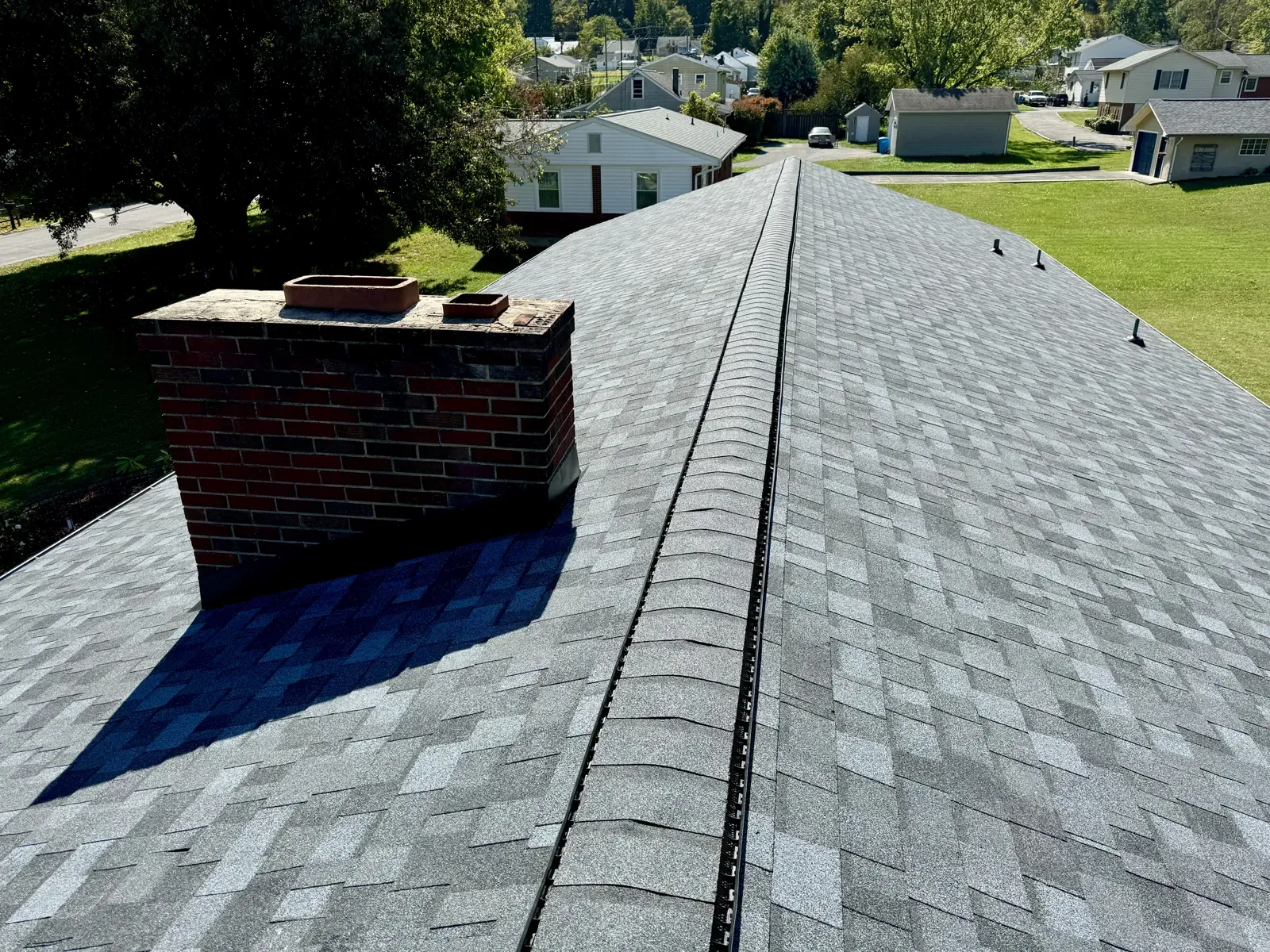
One leak that people don’t expect starts where a roof meets a wall, like over a garage or porch. Small pieces of step flashing tuck up behind the siding there. If they’ve rusted or slipped, water runs down inside the wall. Since siding is the core of what we do, we look at both sides of that joint and fix the real cause, not just the stain.
Our weather here in Thaxton and around Bedford County plays a part, too. Strong summer storms loosen shingles. Then winter freeze and thaw works water into any small gap, and a tiny opening gets bigger. Catching that early is exactly what a repair is for.
Now for the other side. These signs mean a repair may only buy you a little time:
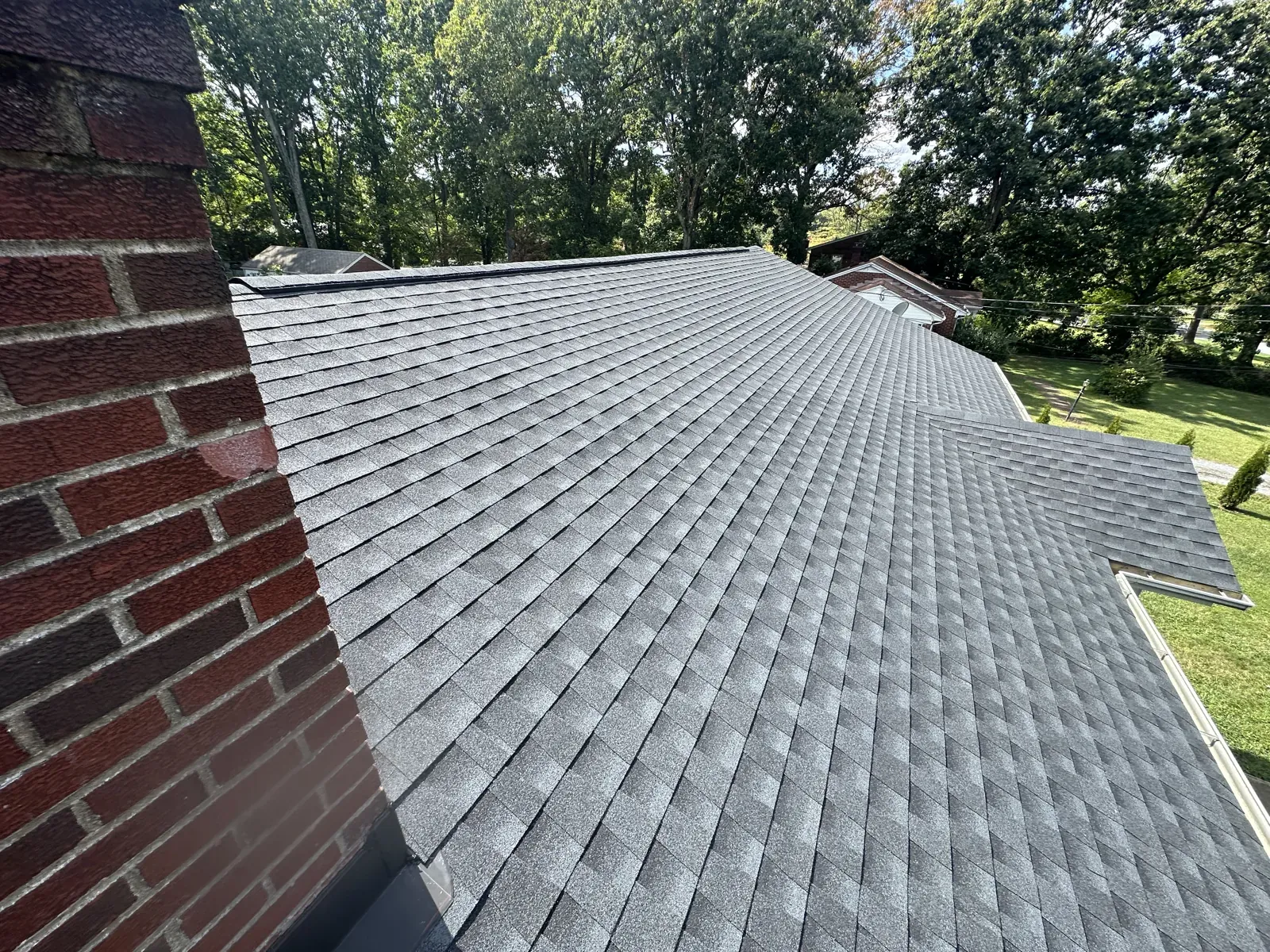
If your roof is showing those signs, we’ll tell you straight. Patching a roof that’s worn out all over can cost you more over time than replacing it once. But if it’s one bad spot on a roof that’s otherwise in decent shape, we’ll tell you that too, and we’ll recommend the repair.
You can spot some of this from the ground with a pair of binoculars, or from your attic with a flashlight after a rain. Please don’t climb up there yourself, especially on a wet or steep roof. That’s what our no-pressure inspections are for.
Once you know where the problem is, the next question is whether fixing that spot is a smart use of your money. A repair is the right call when the damage is limited and the rest of the roof still has good years in it. You’re paying to fix what’s broken, not to replace what’s still working.
Here’s when we’d point you toward a repair:
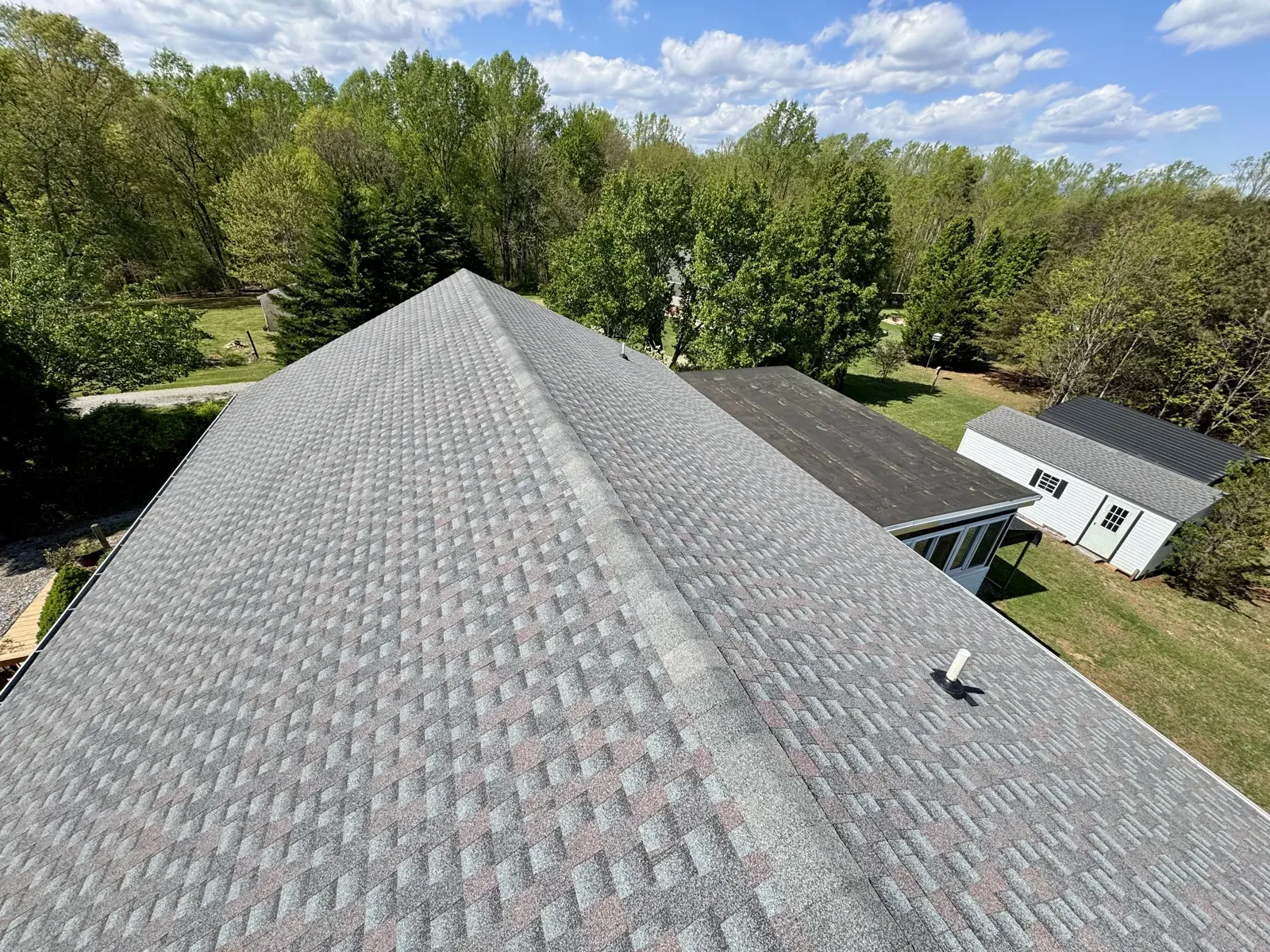
Matching is the tradeoff people don’t think about. Shingles fade in the sun, and colors change over the years. New shingles patched into an older roof can look a shade off, at least at first. On a back slope, most folks don’t mind. On the front of the house, it’s worth talking through before we start.
Storm damage changes the math a little. After a strong wind or hail storm here in Bedford County, the damage can be wider than it looks from the yard. We’ll inspect the roof, document what we find, and put together an estimate and scope of work. If it looks like a claim makes sense, we’ll recommend filing one, and we can meet your adjuster on-site to answer questions about our estimate. Your insurance company decides what’s covered.
Timing matters too, especially if you’re planning other exterior work. Where a roof meets a wall, the flashing tucks up behind the siding. If you’re replacing siding soon, it often makes sense to fix that roof flashing at the same time. That way the trim, flashing, and gutters get tied together once, instead of opening the same wall twice.
If you’re wondering what a repair will cost, it depends on what the job really involves. These are the things that move the price up or down:
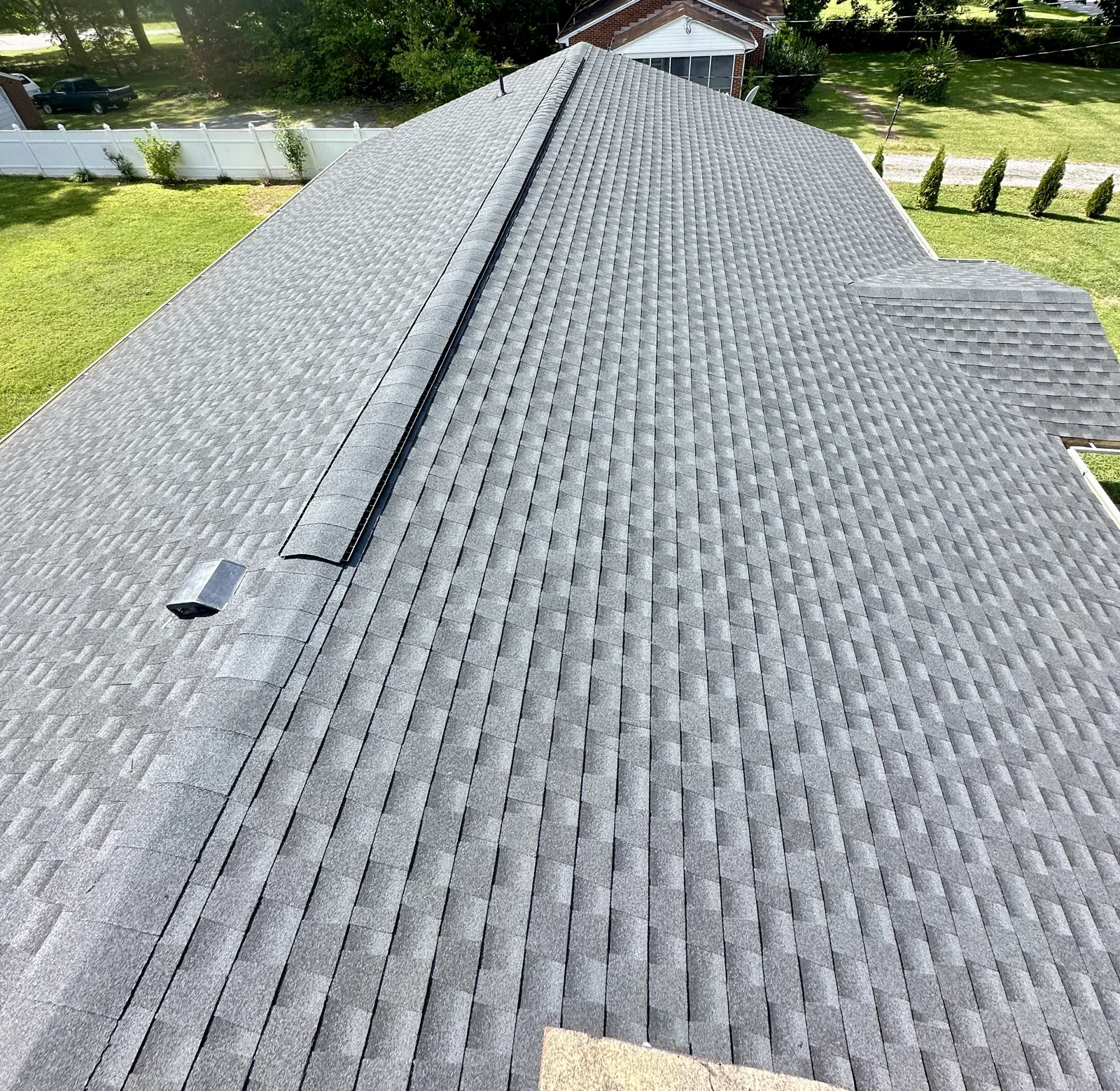
A good contractor should be able to tell you what’s causing the problem, not just where the water shows up. Ask what else they noticed while they were up there, and whether they think the repair will hold or just buy you time. You deserve a straight answer to both.
Our crew brings 40+ years of combined experience to that call. If a repair will do the job, that’s what we’ll recommend. If we think you’d be patching the same roof again next year, we’ll say that plainly and let you decide.
Thinking about Roof repair? Let’s talk.
Get a Free Estimate. Premier Exterior Improvements LLC is ready to help.
Not everything that looks wrong on a roof is a problem. Some things change how a roof looks without changing how well it keeps water out. If that’s what you’re seeing, you don’t need us yet, and we’d rather tell you that than sell you a repair.
Here are the common ones that are cosmetic, at least for now:
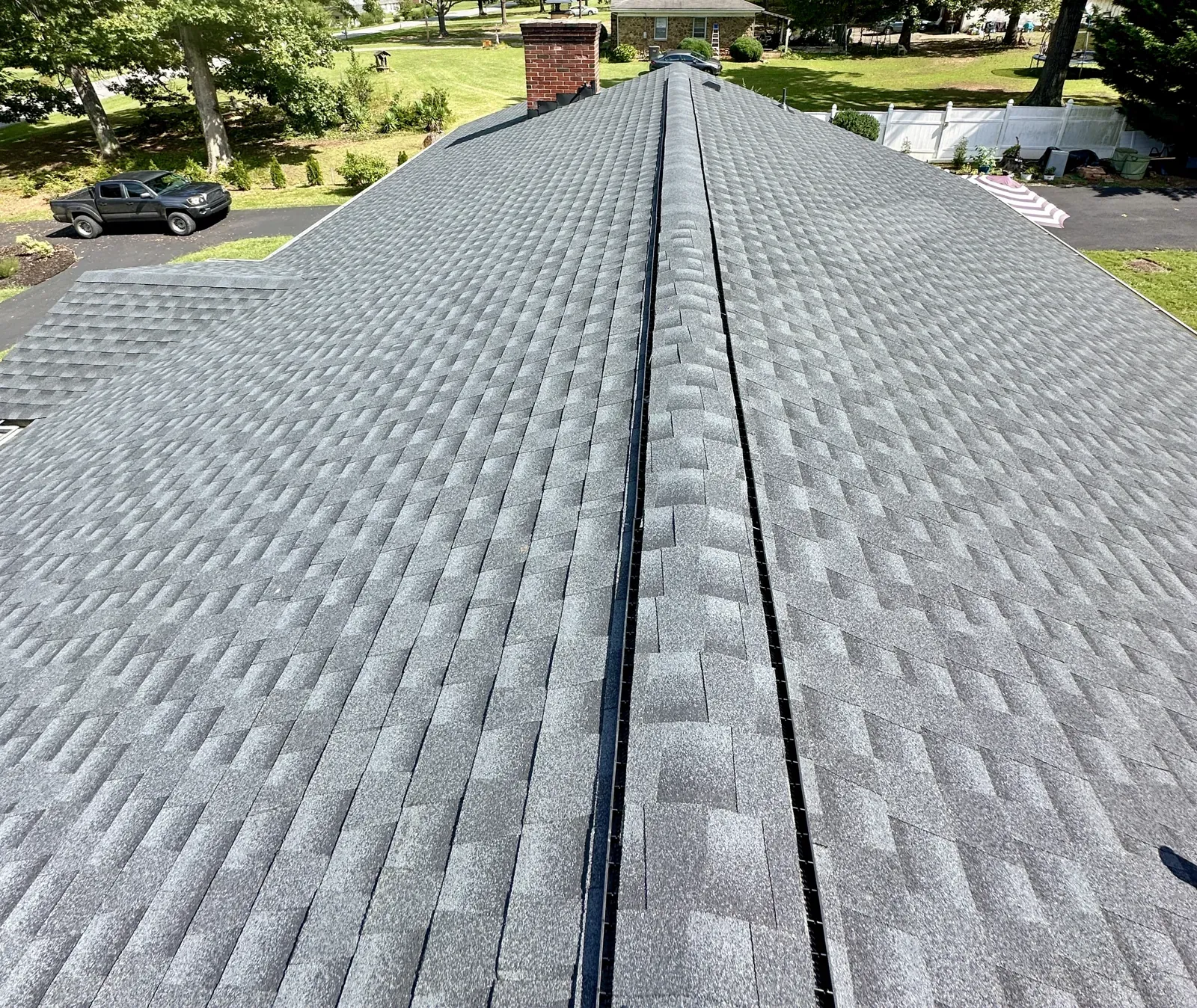
Moss sits right on the line. A few small patches are mostly cosmetic. Thick moss that’s lifting shingle edges holds moisture against the roof, and in our freeze and thaw winters, that’s worth keeping an eye on. If you see it starting to push shingles up, that’s when it moves from cosmetic to a repair.
Sometimes what looks like a roof problem is really a gutter problem. Water spilling over the front edge during a storm, or stains on the fascia board behind the gutter, often just means the gutters are clogged. That’s a gutter cleaning or gutter repair job, not a roofer’s job, and it’s a lot smaller.
It’s also fine to wait and watch. If the streaks bother you, or the color looks tired, that’s a question of how you want the house to look. It’s not a question of whether your roof is failing. Some homeowners decide to live with it until a full replacement is due, and that’s a perfectly sensible choice.
A good rule of thumb: if nothing is missing, lifted, cracked, or soft, and there’s no water showing up inside, it’s probably cosmetic. Check your attic with a flashlight after the next heavy rain. A dry attic and a dry ceiling tell you a lot. Keep the binoculars handy, stay off the roof like we said earlier, and look again after big storms.
If one of these changes, like streaks you can live with turning into shingles that are curling or lifting, that’s when it’s time for a closer look. Until then, you can save your money.
Storm damage is where people feel the most rushed. A strong thunderstorm rolls through Bedford County, and the next day you’re wondering if your roof is okay. The honest answer is that wind damage often looks smaller than it is, or bigger than it is. Either way, it should be checked up close before anyone talks about a whole new roof.
Here’s what wind and hail do to a roof, and why some of it is hard to see from the yard:
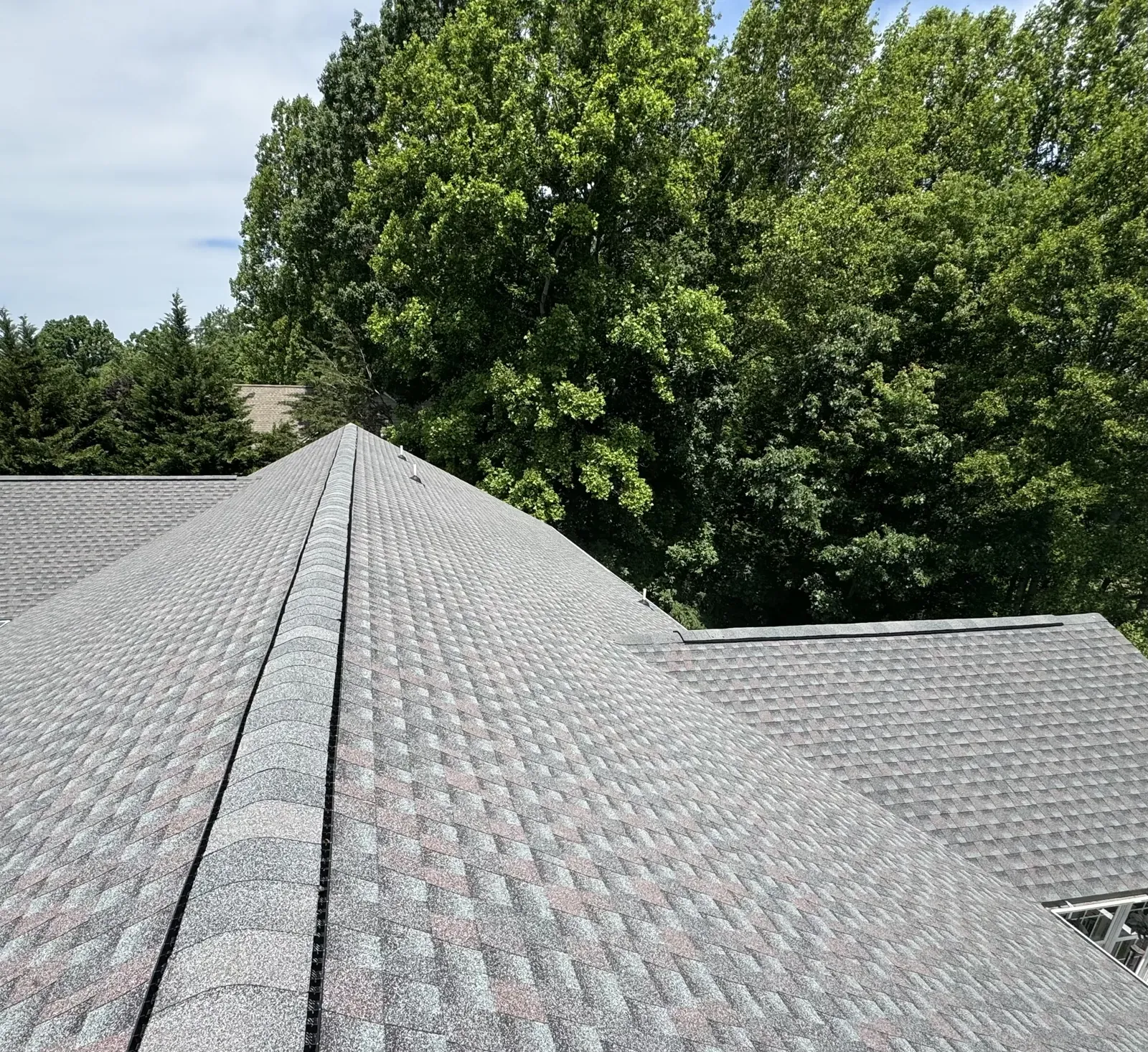
The same storm rarely stops at the roof. Look for gutters that are bent or pulled away, dented downspouts, soffit panels blown loose, and cracked or flapping siding on the side of the house that took the wind. Siding is the core of what we do, so when we inspect after a storm, we look at the whole outside of the house, not just the shingles. That gives you one clear picture of what the storm did.
Right after a storm, a few simple steps help:
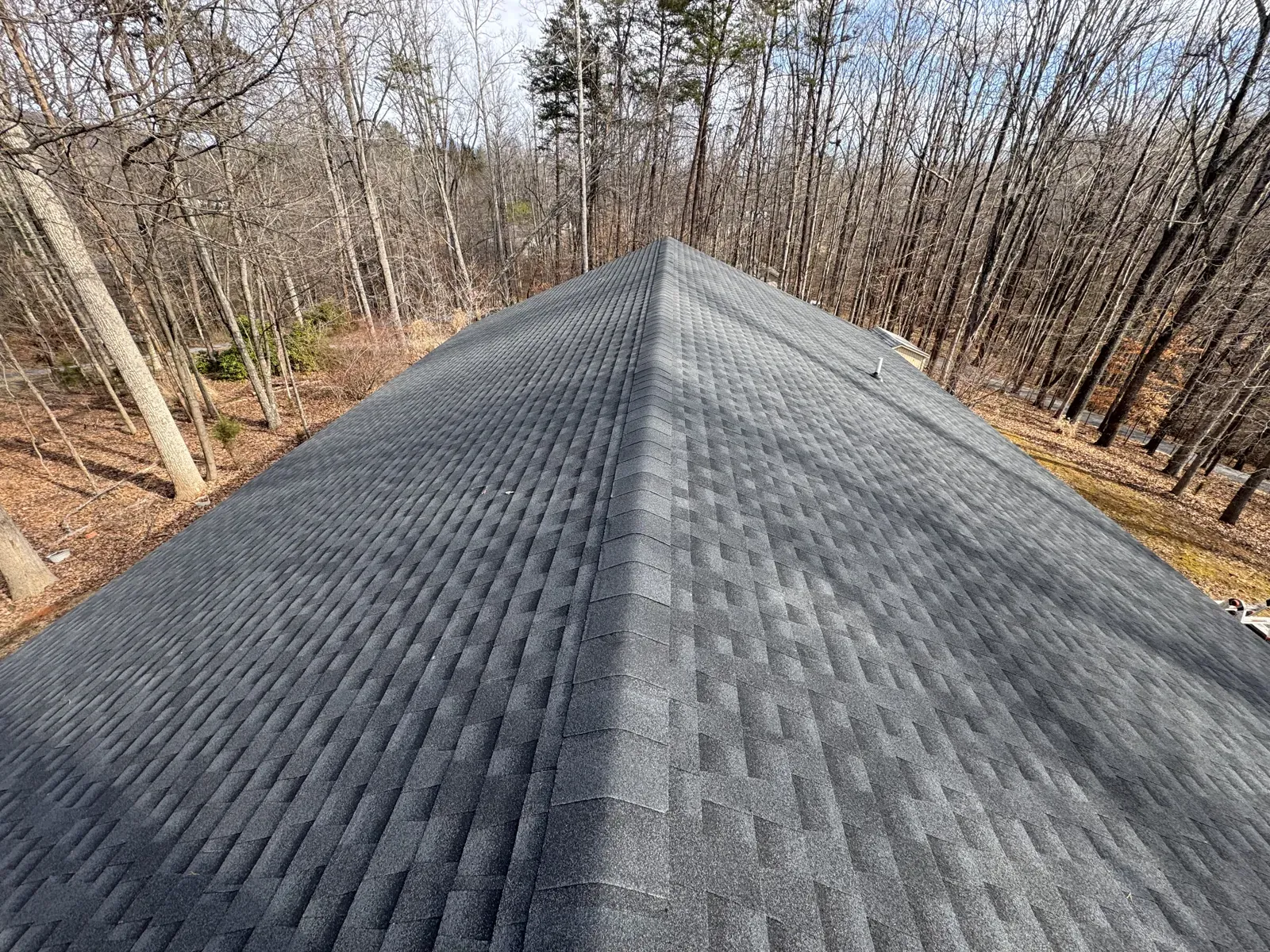
Not every storm means a claim. If a few shingles lifted on one slope, a simple repair may be the smarter move. If the damage is spread out, we’ll walk through the insurance steps we covered earlier and let you decide.
After big storms, you may get knocks on the door from crews you’ve never heard of. Here’s what a good contractor gives you, whoever you hire. Photos of the actual damage. A written scope of work that says what will be fixed and why. A Virginia contractor license you can look up. And a local address, so they’re still around if you have a question next year. We’re a licensed Virginia Class B Contractor, License #2705199374, based right here at 202 Shady Grove Dr in Thaxton.
Once you call, the first step is a look at the roof, not a sales pitch. We offer free estimates and no-pressure inspections. You’ll know what’s wrong and what it takes to fix it before anyone picks up a hammer. If the honest answer is that it doesn’t need work yet, you’ll hear that, too.
A good roof inspection goes past the spot where the water shows up. Leaks travel. Water can get in near the ridge and drip onto your ceiling ten feet away. So a careful check covers several places:
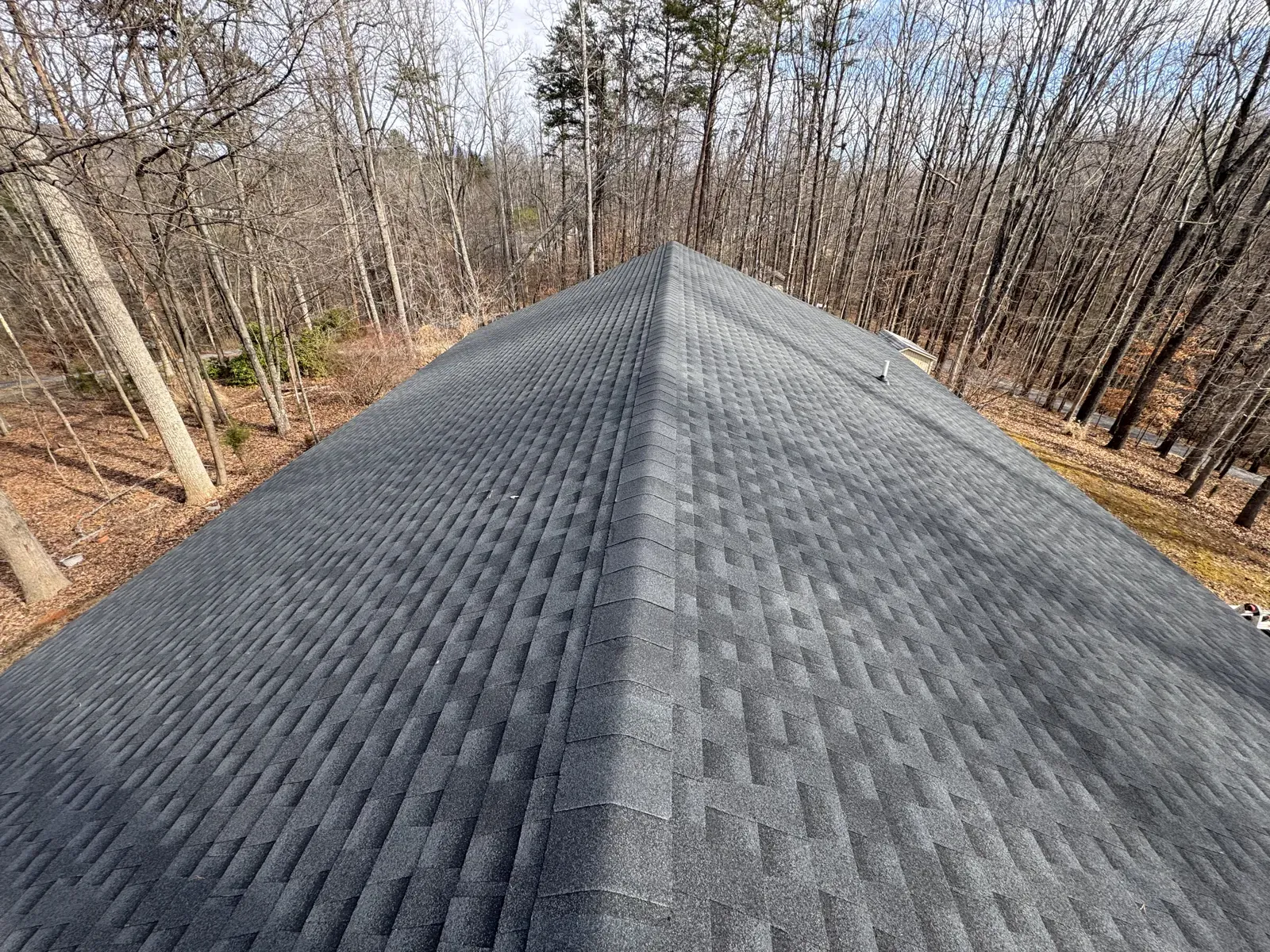
After the inspection, we’ll walk you through what we found and what we think is causing it. Then you get an estimate and a scope of work, which is a written list of what will be fixed and why. Read it through. If something on it doesn’t make sense to you, ask. A good contractor should be able to explain every line in plain words.
The repair itself is usually much smaller than a replacement. On an asphalt roof, the damaged shingles get lifted out without tearing up the good ones next to them. Once they’re out, the layers underneath are open to check. That includes the underlayment, the protective sheet between the shingles and the wood. If the decking is soft or the flashing is shot, that’s the time to replace it. Then new shingles go in, nailed and sealed to lie flat with the rest of the roof. On a metal roof, the work is often replacing worn fasteners and washers or securing a panel that’s lifted.
Weather matters for timing. Roof work needs a dry day. New shingles also seal down best when the sun warms them. In a cold Thaxton winter, the seal strips may not grab on their own right away. That’s why hand-sealing the new shingles is common practice when it’s cold[1]. If a repair runs into the wall flashing behind your siding, both sides of that joint can be handled in the same visit.
On your end, there isn’t much to do. Move cars out of the driveway, keep pets inside, and clear anything sitting in the attic right under the problem spot. Expect some noise overhead while the crew works.
When the work is done, a good crew cleans up old shingles and loose nails before they leave. Take a walk around the yard anyway. Then do the simple check we mentioned earlier. After the next heavy rain, go up in the attic with a flashlight. A dry attic is the best sign the repair did its job.
Estimated range: Roof repairs start at $250 and most run up to about $2,500. Your price depends on your home.
What moves the price up or down:
You get a written, itemized estimate before any work starts. No surprises once the job begins.
Most single-spot repairs, like a few missing shingles or a leak at a vent pipe, take less than a day. The work slows down if the decking underneath turns out to be soft and has to be cut out and replaced. Weather matters too, since roof work needs a dry day and shingles seal best in the sun. If cold weather keeps the seal strips from sealing on their own, the crew hand-seals the new shingles instead.
Yes, you can stay home during most roof repairs. There isn’t much you need to do beforehand besides moving cars out of the driveway, keeping pets inside, and clearing anything stored in the attic right under the problem spot. You should expect some noise overhead while the crew works above you.
Check your attic with a flashlight after the next heavy rain, since leaks often travel before they show up on your ceiling. Water can enter near the ridge and drip ten feet away, so a stain doesn’t always sit right under the source. A dry attic after rain is a good sign, but if you find damp wood or daylight through the roof boards, that spot needs a closer look rather than guesswork from the ground.
Get a free estimate. Call (540) 597-2328 today.
Get a Free Estimate