
One piece per run, far fewer seams to leak
Family-owned siding and exterior experts serving Southwest Virginia
Get a Free Estimate
What’s covered on this page
Sectional gutters come in short pieces joined together, and every joint is a spot that can leak. Seamless gutter installation in Thaxton gives you one long piece for each run, so there are far fewer joints to fail. Sectional gutters cost less and are easier to patch, so if yours are mostly sound, a repair may be all you need. It’s part of the work we do as your gutter service team in Thaxton.
The difference comes down to how the gutter is made. Sectional gutters are the kind you see stacked at the home store. They come in short lengths, and an installer joins them with connectors and sealant until they reach the end of your roof line. A long run on a ranch house might have several of these joints.
Seamless gutters are usually formed on-site from a coil of metal, most often aluminum. They’re cut to the exact length of each wall. So one side of your house gets one continuous gutter with no joints along the way. You’ll still have joints at the corners and where the downspouts connect, but the long straight stretches stay solid.
Seams don’t usually fail on day one. The trouble shows up over time. The sealant in each joint dries out in the summer sun, and our winters freeze and thaw over and over, which keeps working those joints loose. Then a strong thunderstorm dumps a lot of water fast, and a weak seam starts to drip or pour.
A leaking seam doesn’t just make a puddle. It sends water down the same spot every time it rains. That spot is often your fascia, the board along the roof edge that the gutter hangs from, and the siding right below it. Over time you might notice peeling paint, a dark streak down the wall, or wood that feels soft. Since siding is the core of what we do, this is the part we pay closest attention to. A gutter’s real job is keeping water off the walls.
Here’s the plain tradeoff between the two:

Now the honest part. If you have sectional gutters and one or two seams are dripping, you may not need new gutters at all. Resealing a joint, tightening a loose hanger, or fixing a sagging run is often the right job. That’s especially true when the gutters are pitched correctly and the fascia behind them is still solid.
Replacement starts to make sense when leaks keep showing up at different seams, the gutters sag or pull away from the house, or water has already started damaging the fascia. It also makes sense when you’re already redoing the siding or trim. In that case, putting up seamless gutters at the same time means everything along the roof edge gets finished together, and you won’t have to go back later to work around brand-new siding.
One drip doesn’t mean you need new gutters. A pattern does. When the same system keeps giving you trouble in different spots, patching it each time stops making sense. Here’s what to look for, from the roof edge down to the ground.
Start with the gutters themselves. These signs point to a system that’s wearing out, not just one bad spot:
Next, watch what happens during a hard rain. Stand outside under a covered porch during one of our summer thunderstorms and look up. If water sheets over the front edge of a clean gutter, the gutter may be too small or the downspouts too few for that part of the roof. That’s common on steep roofs and long runs, where a lot of water reaches the gutter at once. Patching won’t fix a gutter that’s the wrong size.
Now the honest part. Overflow isn’t always a sizing problem. A lot of the time it’s just leaves, pine needles, or shingle grit packed into the gutter or downspout. If yours overflow and you haven’t had them cleaned in a while, start with a gutter cleaning. If they still overflow once they’re clear, then it’s time to talk about replacement.
Last, look at the ground and the walls. Failing gutters leave marks well below the roof line:
So how do you put it all together? One loose hanger or one leaky corner on gutters that are otherwise solid is a repair. Two or three of these signs on the same house usually points to replacement. That’s even more true if the fascia behind the gutters has started to go soft. When that happens, seamless gutters are worth a serious look, and it makes sense to fix the wood behind them at the same time.
A lot of gutter trouble isn’t the gutter at all. It’s one small part that quit doing its job. Before you price out a whole new system, it’s worth knowing which problems have a cheap, simple answer.
These are the fixes that often solve the problem on gutters that are otherwise in good shape:

If you live in a one-story home and you’re comfortable on a ladder, clearing gutters and downspouts is a job plenty of homeowners do themselves. Once they’re clear, run a garden hose into the far end of each run and watch where the water goes. You’ll find most drips and slow spots that way, and it costs you nothing.
If your main headache is cleaning, think about gutter guards before new gutters. Guards are covers that sit on top of the gutter and keep most leaves out. On a house under a lot of trees, guards on sound gutters may be all you need. The tradeoff is that guards cut down on cleaning but don’t end it. Pine needles and small seeds can still sit on top or slip through, so you’ll still want to check them now and then.
Sometimes the smart move is to wait. Say your gutters are a little tired, but you plan to redo the siding or the roof in the next year or two. A roof job often means pulling the gutters off anyway. New siding may change the trim and fascia the gutters hang on. In that case, keep the old gutters patched and clean for now. Put up new ones as part of the bigger project so you only pay for that work once.
Waiting doesn’t make sense if water is already getting behind the gutter and into the fascia or the wall. Wood that stays wet through our humid summers and freeze-thaw winters only gets worse. That’s the line between “patch it and wait” and “deal with it now.”
When we come out for a no-pressure inspection, this is how we look at it. If a cleaning, a new elbow, or a downspout extension fixes the problem, we’ll tell you that. If your gutters have a few good years left and a siding or roof project is coming, we’ll tell you that too. New seamless gutters are a good answer to a real problem. They aren’t the answer to every drip.
It starts before anyone climbs a ladder. At a free estimate, we walk the roof line with you, measure each run, and look at where water lands now. That tells us how big the gutters need to be and where the downspouts should go.
This is also when you pick a color. Most folks want the gutters to blend with the trim or the siding so they don’t stand out against the house. We’ll walk you through the choices so you’re not guessing from a tiny paint chip.
A few small things on your end make install day go smoother:
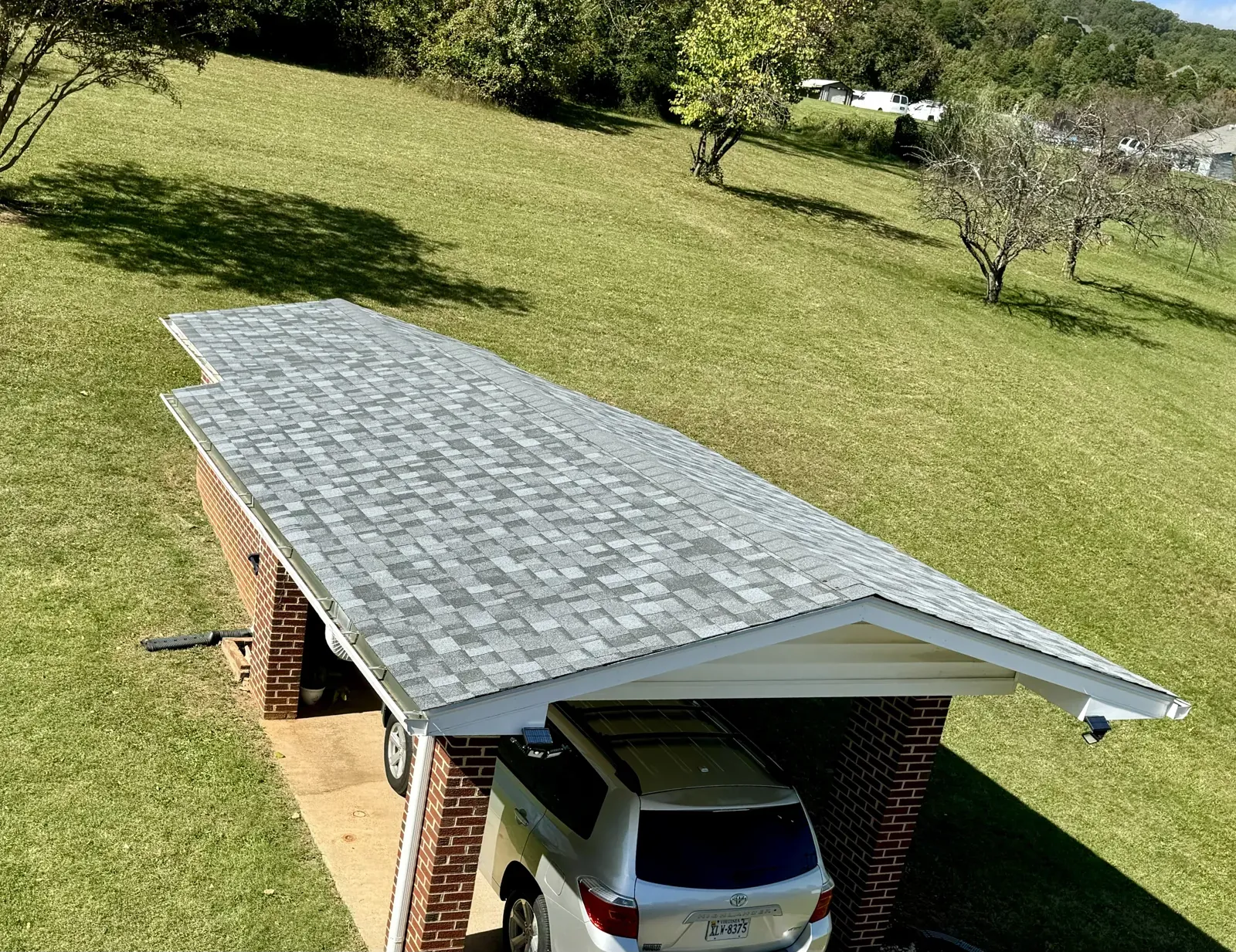
Here’s what a proper install looks like once the work begins. The old gutters come down first. That’s the moment of truth for your fascia, the board the gutters hang on. If it’s soft or rotten, the right move is to fix that wood before anything new goes up. New gutters screwed into bad wood will pull loose. We’d rather tell you that before the job starts than surprise you halfway through.
Next, each run gets formed to length, which is the on-site process we covered earlier. The gutter is hung with hangers spaced along the fascia. It’s set with a slight slope toward the downspouts. You won’t notice the slope from the yard, but without it water just sits in the gutter.
Then come the corners, end caps, and downspouts. These are the only joints on a seamless system, so they need to be sealed well. The downspouts should carry water away from your foundation, not dump it against the wall. That matters a lot during our summer thunderstorms, when a big rain can hit a single downspout all at once.
If you’re redoing siding or trim at the same time, the order matters. Gutters usually go up after the fascia and trim are finished. That way nothing has to come back down, and the new gutters sit tight against fresh, solid wood.
Before the crew packs up, the gutters should be water-tested. Running a hose into the far end of each run shows whether water flows to the downspout or sits in a low spot. It also shows whether any corner drips. You can watch this test yourself, and you should.
The real test comes with the next hard rain. Step out under a covered porch and look. Water should move along the gutter and out the downspouts without spilling over the front edge or dripping at the corners. If it doesn’t, call us. A good install is one you don’t have to think about every time it storms.
Two details decide whether a seamless gutter works for years or gives you trouble by next spring. One is slope, how much the gutter drops on its way to the downspout. The other is hanger spacing, how close together the supports sit. Neither one shows up on a brochure, but both show up in the first hard rain.
Slope is a balancing act. Too little, and water sits in the gutter. Too much, and you’ve got a different set of problems. A common rule of thumb is about a quarter inch of drop for every 10 feet of gutter. That’s enough to keep water moving without making the gutter look crooked.
Here’s what happens when it’s off in the other direction. A gutter that drops too steeply sends water racing toward the downspout. In a heavy summer thunderstorm, that rush can overshoot the opening and spill over the end. It also looks wrong. You’ll see the gutter line tilt against your fascia and trim, which is hard to miss on a house with fresh siding.
Long runs need a different plan. On a wide ranch house or a long back wall, sloping one gutter the whole way can leave it hanging low at one end. A better fix is often to slope it both ways from the middle, out to a downspout at each end. That keeps the drop small and gives a big storm two ways out instead of one.
Hangers carry more weight than most folks think. A gutter full of water from a downpour is heavy. Add wet leaves, or ice that builds up during our freeze-thaw winters, and the load climbs fast. Hangers that sit too far apart let the gutter bow between them. A bowed spot holds water, and that water adds even more weight.
Many installers place hangers about every two feet as a starting point. Some spots call for closer spacing:
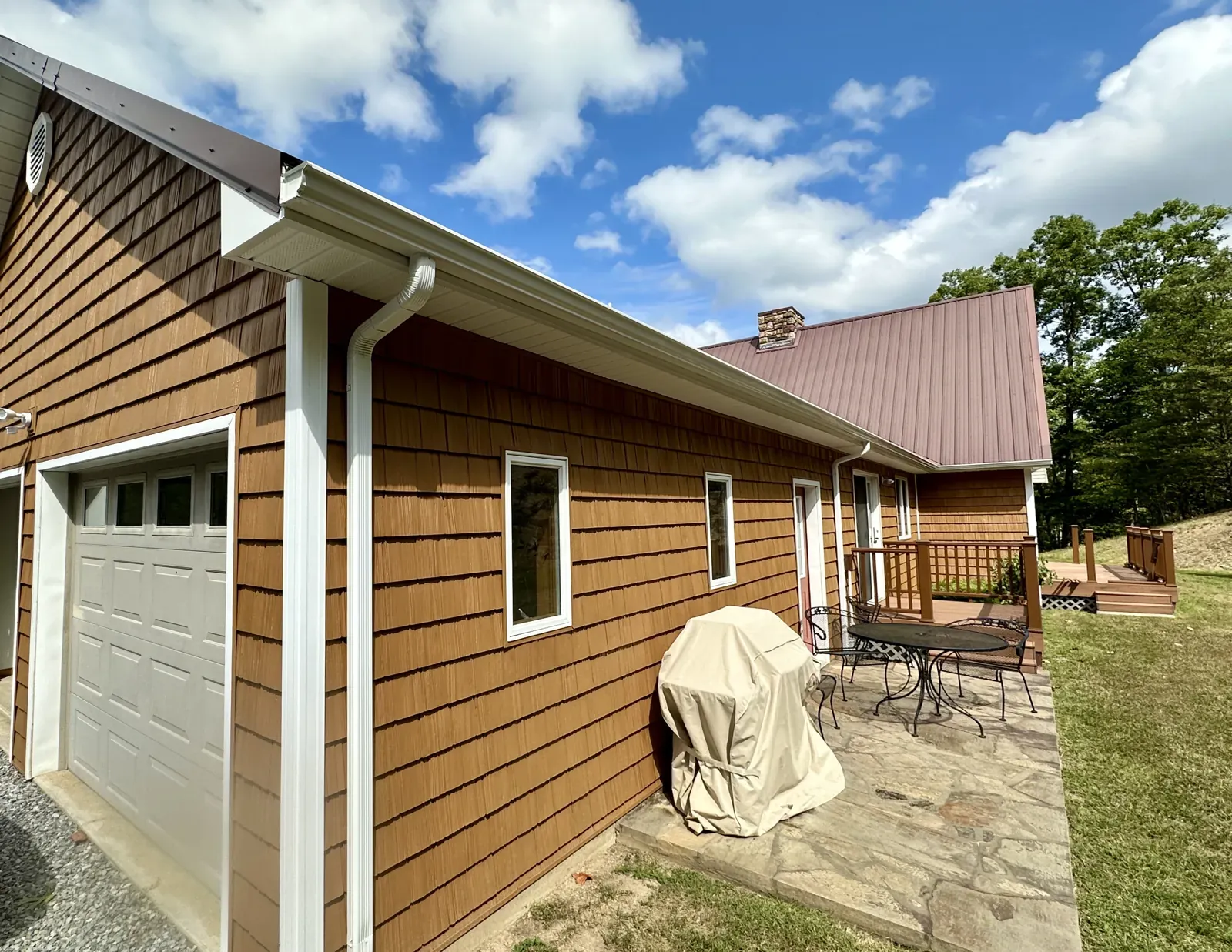
You can check both of these from your yard. Stand back far enough to see a whole run against the trim line. The gutter should look straight and steady, with a drop you can barely see. Look for dips between hangers, especially after a storm. Watch the downspout end during a heavy rain to see whether water goes down the spout or over the top.
Before any installer starts, it’s fair to ask a few questions. Where will the downspouts go? Will the long runs slope one way or both ways? How will the hangers be spaced under valleys and trees? A good contractor won’t mind. These answers tell you whether someone measured your house or just your roof line.
Yes, a small dent usually doesn’t need a full replacement. A falling limb or ladder bump can crush a short stretch of gutter, and if the rest of the run is sound, that one piece can be pulled back into shape or swapped out on its own. This only makes sense when the fascia behind it is still solid and the rest of the gutter isn’t showing the rust, cracks, or sagging that point to a bigger problem.
On most homes, yes. One continuous piece per run means far fewer joints to leak. Sectional gutters cost less and are easy to patch, so if yours are mostly sound, a repair may be the better buy. We’ll tell you which one fits your house.
Aluminum gutter coil comes in a wide range of factory colors. Most homeowners match the trim or the siding so the gutters blend in. We’ll help you pick at the estimate, so you’re not guessing from a tiny chip.
Get a free estimate. Call (540) 597-2328 today.
Get a Free Estimate